
Let me tell you a story. About ten years ago, I thought I was a decent soccer player. I could run for days, make a decent cross, and I understood the game. Then, a friend dragged me to a dimly lit local sports hall on a cold Wednesday night. “We’re short a player for futsal,” he said. I shrugged, put on my regular indoor soccer shoes, and figured it was the same thing. I was wrong. Within five minutes, I was gasping for air. The ball, which felt strangely heavy and reluctant to bounce, seemed glued to my opponents’ feet. My first touch, which I was proud of on grass, betrayed me completely, sending the ball skidding away. It was humbling. But more than that, it was exhilarating. That night, I didn’t just play a game; I discovered a passion that would completely change how I understood football. That’s what futsal is. It’s not just soccer’s little cousin played indoors. It’s a brilliant, demanding, and beautiful sport in its own right, and today, I want to share exactly why with you.
What is Futsal? The Game of Touch and Thought
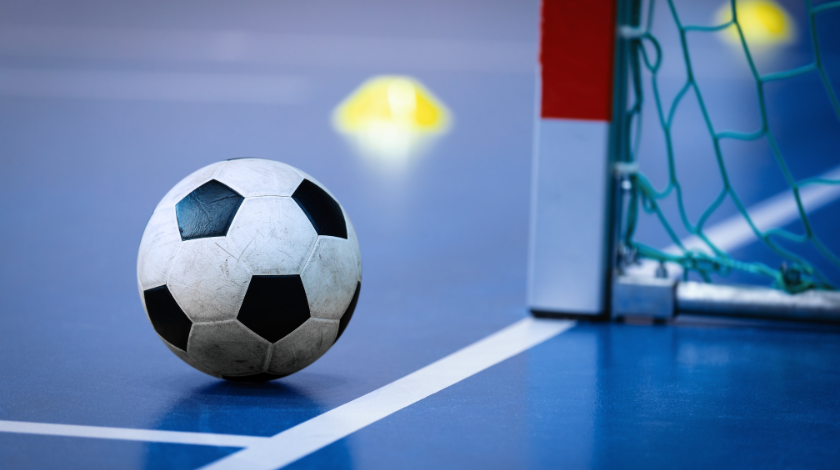
So, let’s clear up the biggest confusion first. Futsal is not the same as the “indoor soccer” you might see played off the boards in North America. That’s a different sport, often called arena soccer. Futsal, whose name comes from the Portuguese or Spanish “fútbol sala” meaning “hall football,” is a FIFA-governed sport played on a hard, flat court with lines, not walls. Think of a basketball court-sized area with handball goals. The game is played five-a-side, including the goalkeeper, with a rolling substitution system that keeps the intensity sky-high. But the heart of futsal isn’t in the size; it’s in the philosophy. It’s a game where pure power and long-distance running are replaced by breathtaking skill, intelligent movement, and split-second thinking. The ball is designed to stay on the floor, rewarding players who can master it with the sole of their foot.
From Montevideo to the World: A Pinch of History
The story of futsal starts in 1930 in Montevideo, Uruguay. A teacher named Juan Carlos Ceriani, inspired by football, basketball, water polo, and handball, wanted to create a sport young people could play year-round in YMCAs. The first rules were penned, emphasizing control and skill. The sport spread like wildfire across South America, particularly in Brazil, where it found its spiritual home. You see, on the streets and concrete pitches of Brazil, kids didn’t always have access to huge grass fields. They played on hard surfaces with a heavier, less bouncy ball often made of cloth or cork. This environment became the perfect incubator for the magical skills of players like Pelé, Zico, Socrates, and later, Ronaldinho and Neymar. They all credit futsal as the foundation of their technique. The sport was officially taken under FIFA’s wing in 1989, and the first FIFA Futsal World Cup was held in 1989, cementing its place as a global phenomenon.
Why Futsal is the Ultimate Teacher: Benefits Beyond the Court
If you want to become a better football player, or just a more skilled and fit athlete, futsal is perhaps the best training ground you can find. Here’s why.
First, it forces lightning-fast decision making. The court is small, and players are always in close proximity. You simply don’t have the time to receive the ball, look up, think for three seconds, and then make a pass. In futsal, you must know what you’re going to do with the ball before it even arrives at your feet. Your head is on a constant swivel. This habit, once ingrained, translates magnificently to the outdoor game, where suddenly you feel like you have all the time in the world.
Second, it builds impeccable ball control and technique. With a low-bounce ball and constant pressure, you learn to receive and pass with precision. The surface encourages you to use the sole of your foot to roll, drag, and protect the ball in a way grass doesn’t. Your close control in tight spaces becomes second nature. I remember after a few months of weekly futsal, going back to outdoor soccer. My first touch was noticeably softer, and I was much more comfortable with opponents closing me down. The game felt slower, and I felt more composed.
Third, it is an incredible fitness workout. Don’t let the small area fool you. The game is a series of short, explosive sprints, sharp changes of direction, and rapid transitions from attack to defence. The rolling subs mean you play in short, high-intensity bursts. You develop a different kind of fitness—not the long-distance aerobic engine of a midfielder, but the explosive power and recovery of a sprinter. You’ll leave the court drenched in sweat after just a 40-minute game.
The Rules That Shape the Beautiful Game
Understanding a few key rules unlocks the beauty of futsal.
The Setup: A futsal court is roughly basketball-court sized, with goals that are handball-size (3m x 2m). The game uses a size 4 ball that has 30% less bounce than a standard soccer ball. Matches are two halves of 20 minutes of stopped-clock time, meaning the clock halts for every dead ball, ensuring every second is played.
The Four-Second Rule: This is a game-changer. For kick-ins (thrown-ins are replaced by kick-ins), goal clearances, and corner kicks, the player has only four seconds to put the ball back into play. This keeps the game flowing at a frantic, thrilling pace. There’s no time for dawdling.
Accumulated Fouls: This is one of the most strategic rules. After a team commits a fifth accumulated foul in a half, the opposing team gets a direct free-kick from the second penalty mark (10m out) without a wall. This penalises cynical, defensive fouling and rewards attacking play.
The Goalkeeper’s Unique Role: The futsal goalkeeper is a libero, a playmaker. They have only four seconds to release the ball from their hands or feet when in possession. They cannot touch the ball again after a teammate deliberately passes it to them. This rule prevents time-wasting and encourages a fast, building style of play from the back. A good futsal keeper is essentially a fifth outfield player with great distribution.
Getting Started: What You Actually Need
The beauty of futsal is its accessibility. You don’t need much. Firstly, shoes. Please, learn from my mistake. Regular indoor soccer shoes or running shoes won’t cut it on the smooth surface. You need proper futsal shoes. They have flat, gum-rubber soles designed for gripping the court and allowing you to pivot and turn quickly. The difference in traction and feel is night and day.
Secondly, the ball. If you’re practicing alone, get a proper futsal ball. Its reduced bounce will force you to work on controlling it with the ground, not out of the air.
That’s really it. Shorts, a shirt, and shin guards are recommended. Then, just find a local sports centre, YMCA, or club that runs sessions. Many places have “pay-and-play” casual leagues perfect for beginners. Don’t be intimidated. Everyone was a beginner once, and the futsal community is generally welcoming because everyone is there for the love of the skillful game.
How Futsal Forges Soccer Superstars
Look at any of the modern magicians of football. Lionel Messi’s dizzying dribbling in crowded penalty areas? That’s futsal footwork. Kevin De Bruyne’s ability to play a penetrative pass in a phone booth? That’s futsal vision. Cristiano Ronaldo’s rapid step-overs and close control? Futsal roots.
The evidence isn’t just anecdotal; it’s institutional. Major soccer academies around the world, from Barcelona’s famed La Masia to English Premier League clubs, now incorporate futsal into their youth training regimens. They understand that the condensed, high-repetition environment is a laboratory for skill development. It teaches players to be comfortable in chaos, to solve problems with their feet, and to embrace creativity. The small-sided game ensures everyone gets countless touches, something that can’t always be guaranteed on a full-sized pitch with 22 players.
Conclusion
Futsal is more than a sport; it’s an education. It strips football down to its core elements of skill, intelligence, and creativity. It is demanding, incredibly fun, and perhaps the most effective tool for developing as a complete player. Whether you’re a seasoned soccer player looking to sharpen your skills, a parent seeking a great sport for your child that builds incredible coordination, or just someone looking for a fantastically social and intense workout, I cannot recommend futsal enough. Take it from someone who learned the hard way on that cold Wednesday night. Step onto the court, feel the unique grip of the shoes, the weight of that low-bounce ball, and get ready to fall in love with the beautiful game all over again, in its purest, most intense form.
Frequently Asked Questions (FAQ)
Q: Is futsal the same as indoor soccer?
A: No, they are different sports. The main differences are that futsal is played on a lined court with a low-bounce ball and no walls, while indoor soccer (or arena soccer) is often played off boards or walls with a standard soccer ball.
Q: Can futsal shoes be used for indoor soccer?
A: They can be, but it’s not ideal. Futsal shoes are designed for flat, smooth surfaces. Using them on the artificial turf or carpet of an indoor soccer arena may wear the soles down quickly and not provide optimal traction.
Q: How long is a futsal game?
A: A standard match is two halves of 20 minutes each, with the clock stopping whenever the ball is out of play. In reality, a full game often takes about 60-90 minutes to complete with half-time and stoppages.
Q: Do professional soccer players really play futsal?
A: Absolutely. Many top professionals, especially from South America and Europe, grew up playing futsal and credit it for their technical skills. Clubs now actively use it for training to improve players’ close control, decision-making, and fitness.
Q: Is futsal good for fitness?
A: Extremely. It provides a high-intensity interval training (HIIT) workout, improving cardiovascular health, leg strength, agility, and explosive power through constant sprinting, changing direction, and quick movements.